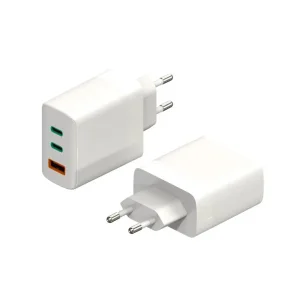
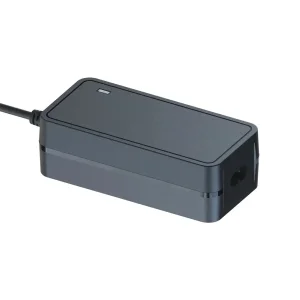
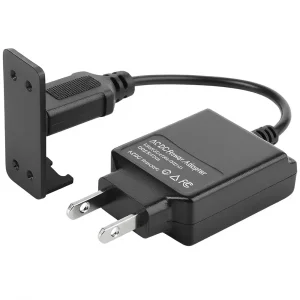
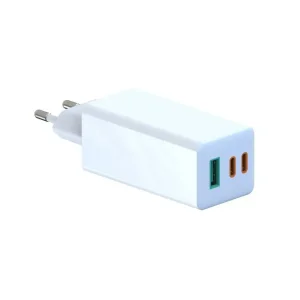
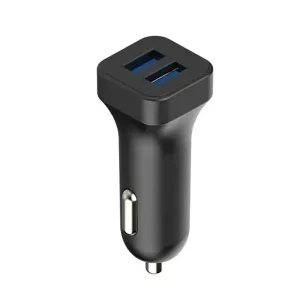
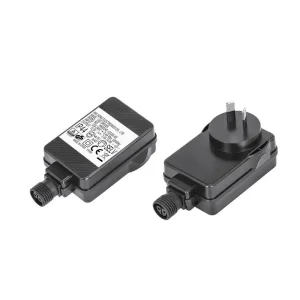
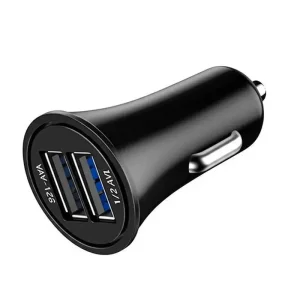
Explore our core open-frame switching power supplies and high-efficiency power converters engineered for global enterprise applications.
Understanding critical parameters, architecture, thermal design, and system integration strategies for industrial and commercial systems.
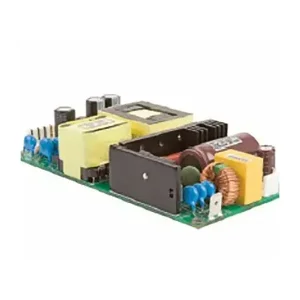
Modern electronic architectures demand compact configurations. Open frame switching power supplies eliminate the external enclosure, allowing designers to maximize internal volume, optimize conduction cooling pathways, and reduce system weight without compromising power output limits.
Without a metal case trapping internal heat, open frame power units rely on natural convection, conduction via mounting standoffs, or system forced-air. Correct placement within the host enclosure prevents localized thermal pockets, maximizing system lifetime and efficiency.
By exposing internal components, open frame topologies demand stringent PCB-level shielding and routing. Integrating active power factor correction (PFC) and class-leading electromagnetic filters ensures conformity to CISPR 32/EN 55032 standards for radiated emissions.
Analyzing procurement trends, compliance benchmarks, and why global OEMs prioritize Tier-1 engineering capabilities.
In the high-stakes sectors of Industrial IoT, medical equipment, telecommunications, and high-performance computing, power architectures are the cornerstone of reliability. Global buyers are moving away from off-the-shelf commoditized power converters. They now demand strategic partnerships with factories capable of tailoring electrical profiles, connectors, and mounting forms to meet stringent space limits.
Procurement teams evaluate manufacturers on three primary metrics: compliance integrity, supply chain resilience, and custom engineering agility. Selecting an open frame switching power supply supplier involves evaluating design margins. A robust design ensures operation over extreme input fluctuations (e.g., 90V AC to 264V AC wide-range inputs), extreme temperatures (-20°C to +70°C), and high surge currents without triggering over-temperature protection (OTP) prematurely.
Procurement values reliability metrics like Mean Time Between Failures (MTBF). Units with >50,000 to 100,000 hours of MTBF significantly minimize warranty field-service costs, justifying minor variations in initial unit pricing.
Cross-border commercialization requires unified approvals. Devices must bear UL, CE, SAA, KC, PSE, and CCC markings, ensuring smooth customs clearance and swift compliance pathways for end-system certifications.
Compliance with RoHS and REACH regulations, along with UL 94 V-0 flame-retardant enclosures or PCB materials, is mandatory for entering the European Union, North American, and Japanese industrial markets.
A premier Chinese manufacturing force delivering advanced power adapter, charger, and open frame technologies since 2010.

Location: No.129 of the first industrial zone, Lisonglang Community, Gongming Town, Guangming New District, Shenzhen, Guangdong, China.
Established in August 2010, Shenzhen FuYun (RUIYU) Technology Co., Ltd. is a comprehensive enterprise integrating R&D, production, sales, and after-sales services. We specialize in high-efficiency power adapters, smart chargers, open frame switching power supplies, and high-pressure core parts for personal care instrumentation.
Our state-of-the-art facility houses more than 800 employees and a 30+ member executive management team. We have deployed a comprehensive array of advanced automation equipment, precision optical inspection units, and environmental reliability testing instruments to maintain defect-free production runs.
Since our inception, we have continuously fortified our internal management protocols, refined our quality management system, and heightened customer service capabilities. Through these efforts, our products hold a dominant 60% market share in the United States and European Union, alongside rapid market penetration in China, Japan, and South Korea.
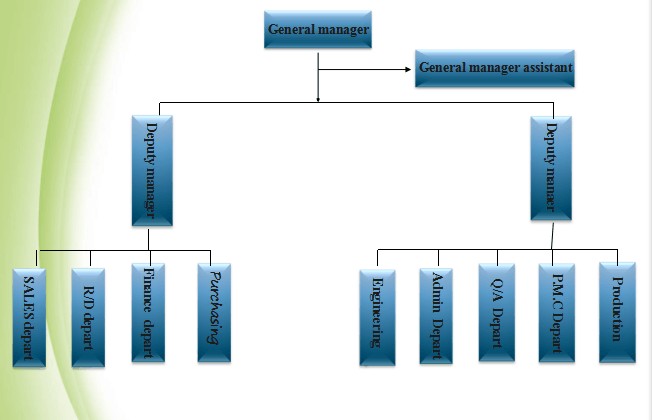
How our integrated departments collaborate to deliver 100% certified power equipment worldwide.
Focuses on state-of-the-art topology design, safety approval preparation, and developing power systems that adapt to evolving global technical standards.
Source premium components and raw materials based on tight production schedules, ensuring cost stability and on-time order fulfillment.
Rigorous inspection of incoming materials. Oversees the execution of our Standard Operating Procedures (SOP) and runs 100% electrical stress tests before shipping.
Runs automated surface mount (SMT), reflow soldering, manual assembly lines, and wave soldering systems following ISO9001:2000 paradigms.
Our dedicated international sales division handles technical consultations, custom RFQs, compliance verifications, sample approvals, and global logistics. Operating across global time zones, we offer 24/7 service via email, telephone, and direct communication platforms like WeChat, Skype, and Facebook. We are fully committed to becoming your primary OEM/ODM partner.
A decade-long track record of quality scaling, certification achievements, and market expansion.
Establishment: RUIYU TECHNOLOGY is incorporated in Shenzhen, focusing on the engineering and manufacture of high-reliability AC-DC power adapters, battery chargers, and open frame switching power supplies.
Global Safety Approvals: Attained critical global regulatory certifications including TUV, GS, BS, CE, UL, FCC, C-UL, PSE, SAA, and CCC for our main power adapter portfolios.
Environmental Compliance: Validated full compliance with EU RoHS requirements. All materials tested and certified by SGS Group.
ISO 9001 Registration: Implemented and successfully audited the ISO 9001:2000 quality management system across our design, testing, and production facilities.
Scalability Breakthrough: Monthly production output reached 800,000 units. Consolidated major client bases in the US, EU, UK, Japan, and signed critical ODM supply agreements with partners in South Korea.
An overview of next-generation power architectures, thermal technologies, and emerging green standards.
Gallium Nitride (GaN) and Silicon Carbide (SiC) are transforming open frame switching power supplies. By utilizing high-frequency switching, they reduce magnetics and passive component sizes, achieving efficiency ratings over 95% and significantly higher power density.
Medical applications require compliance with IEC 60601-1 (3rd/4th Edition), requiring double isolation barriers (2x MOPP) and ultra-low leakage currents. Next-generation open frame layouts prevent electrical risks to patients while preserving clean power output.
Transitioning from analog PWM circuits to digital signal controllers (DSCs) allows real-time tuning of loop performance under varying load profiles. This technology enables I2C, PMBus, or CAN Bus telemetry, transmitting key metrics like temperature, output current, and system warnings to host controllers.
Our team functions as one unified family, prioritizing inter-departmental synergy to accelerate product development cycles and maintain high manufacturing standards.
Crucial integration, cooling, safety, and compliance considerations when designing-in open frame power supplies.
Q1: How do I manage heat dissipation in an open-frame power supply?
A1: Since open frame designs lack active internal fans, heat must be managed via convection cooling, forced air cooling, or conduction cooling. Designers should refer to the manufacturer's derating curves. Forced airflow (measured in Linear Feet per Minute, or LFM) across the heat sinks can significantly increase the power rating, while convection cooling may require derating the total power output at elevated ambient temperatures.
Q2: What mounting clearances are necessary for open-frame power supplies?
A2: Open frame switching power supplies must maintain strict creepage and clearance distances to satisfy safety agency standards (like UL 62368-1). Typically, a minimum clearance of 6.4mm is required between the solder side of the power supply PCB and any metallic chassis parts of the host system. Non-conductive isolation barriers or insulating sheets are often placed beneath the PCB to meet regulatory limits.
Q3: How do open frame power supplies comply with Electromagnetic Interference (EMI) regulations?
A3: Since they lack a metal enclosure, open frame power units rely on internal EMI filters, proper PCB ground planes, and high-frequency switching shielding. However, the host chassis design also plays a critical role. System designers must ensure low-impedance ground connections at the mounting holes and pay close attention to input and output wire routing, as these cables can act as antennas for radiated noise.
Q4: Can these power supplies run at 240VAC input in industrial zones?
A4: Yes. All our core products feature universal wide-range inputs (90V AC to 264V AC). This covers standard residential grids (110V-120V) as well as commercial/industrial systems (220V, 230V, and 240V AC) without requiring manual switch selection.
Q5: What is the significance of the 50,000-hour MTBF rating?
A5: Mean Time Between Failures (MTBF) measures electrical reliability, representing the statistical probability of failure under standard operational loads. By using premium Japanese electrolytic capacitors and optimized thermal designs, we achieve MTBF rates exceeding 50,000 hours. This extends the service life of host machines, medical appliances, and automated factory equipment.
Q6: What customization options are available for industrial projects?
A6: We offer custom output voltages, current limits, modified cable harnesses, specialized terminal blocks, and custom PCB form factors. Our R&D team can adapt existing chassis layouts to match your spatial and electrical constraints, while ensuring compliance with international safety certifications.
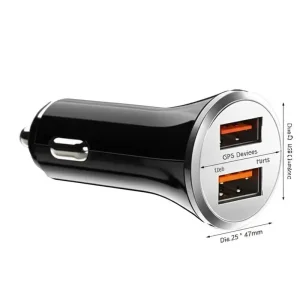
Browse our selection of certified wall-mount chargers, custom car adapters, desktop power modules, and smart USB accessories.
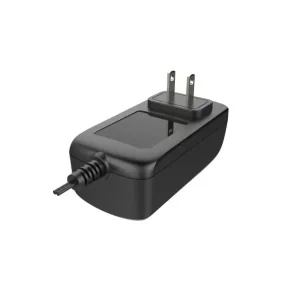
 Tech Adapter