 Tech Adapter
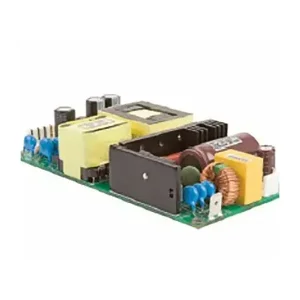
Explore our high-efficiency, certified open frame switching power supplies and adapter solutions customized for New York’s demanding tech, telecom, and industrial environments.
New York is a critical hub for high-technology industries, transitioning rapidly from traditional manufacturing to advanced engineering, biotechnology, defense, and smart infrastructure. Upstate New York—particularly the Albany Tech Valley, Rochester, and Buffalo—is recognized globally for semiconductor fabrication and advanced materials research. Meanwhile, New York City serves as a command center for telecommunications, dense edge-computing networks, and medical healthcare innovations.
These advanced sectors share a common requirement: reliable, high-density, and highly efficient Open Frame Switching Power Supplies (SPS). In systems where internal space is at a premium and heat dissipation must be managed precisely, enclosed power supplies are often too bulky. Open frame modules offer the ideal mechanical layout, enabling design engineers to optimize convection air cooling paths or utilize the system's chassis as a heatsink.
Our solutions target these specific local applications. From compliance with NYC electrical codes to meeting the low electromagnetic interference (EMI) requirements of medical systems in hospitals like Mount Sinai or New York-Presbyterian, our products bridge the gap between design challenges and stable electrical performance.
As power efficiency regulations tighten globally, switching power supplies must offer higher power density, advanced thermal architectures, and digital control integration.
The adoption of Gallium Nitride (GaN) and Silicon Carbide (SiC) semiconductors allows switching power supplies to operate at higher frequencies. This significantly reduces the size of magnetics (transformers and inductors), leading to ultra-compact open frame designs with efficiencies exceeding 94%.
Global regulations, including US DoE Level VI, EU ErP Lot 6, and CoC Version 5 Tier 2, mandate extremely low standby power consumption (often under 0.15W or 0.075W) and high average active efficiency to minimize energy footprint in massive industrial deployments.
Industrial systems and datacenters increasingly require real-time telemetry. Open frame power supplies equipped with PMBus/I2C interfaces enable remote monitoring of output voltage, operating temperature, and load status, allowing for predictive maintenance and zero-downtime operations.

To compete effectively in the global marketplace, New York businesses require both engineering precision and cost-effective scaling. This is where the synergy between local design requirements and Shenzhen’s advanced electronics manufacturing ecosystem becomes a significant advantage.
Shenzhen FuYun (RUIYU) Technology Co., LTD. offers a robust manufacturing footprint that provides New York buyers with three main benefits:
Our operational scale, production capacity, and global footprint built since 2010.
A timeline of our commitment to safety certifications, quality management systems, and market expansion.
Establishment: RUIYU Technology was founded in Shenzhen, focusing on R&D and production of AC/DC power adapters, battery chargers, and open frame switching power supplies.
Global Certifications: Obtained universal safety approvals including TUV, GS, BS, CE, UL, FCC, C-UL, PSE, SAA, and CCC, enabling global compliance.
Environmental Compliance: Our product portfolio achieved full RoHS compliance, verified through testing by SGS Company.
Quality Management: Implemented and certified under the ISO9001 Quality Management System, standardizing our manufacturing SOPs.
Scale and Reach: Monthly production output reached 800,000 units, securing OEM/ODM partnerships across the USA, EU, UK, Japan, South Korea, and China.
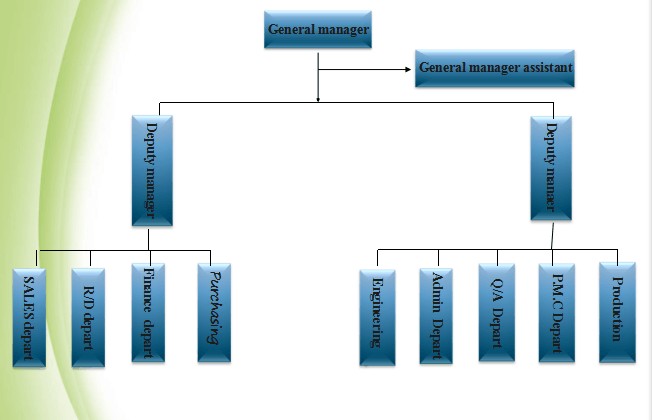
At FuYun (RUIYU) Technology, we rely on structured, cross-departmental coordination to handle complex OEM/ODM projects from initial design to final delivery:
Focuses on power density optimization, thermal modeling, and safety certification preparation to ensure designs meet global regulations.
Manages component sourcing, selecting long-lifetime electrolytic capacitors, high-grade magnetic cores, and semiconductors from audited suppliers.
Responsible for incoming material inspections (IQC), in-process checks (IPQC), and final testing (OQC) to maintain consistent output.
Manages manufacturing schedules and provides 24-hour service to streamline logistics and support for global procurement teams.
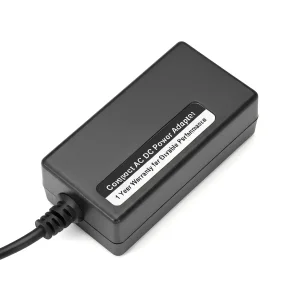
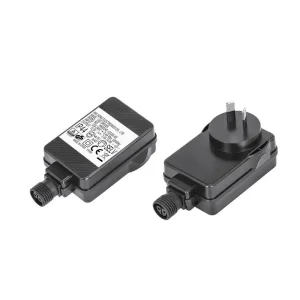
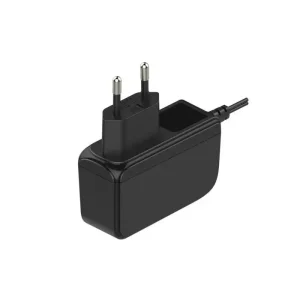
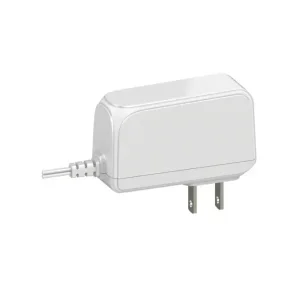
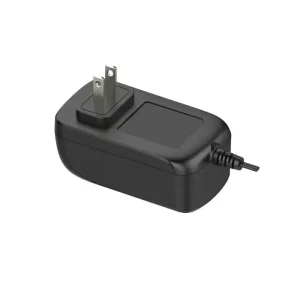
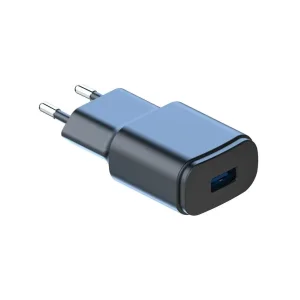
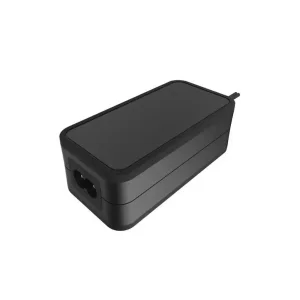
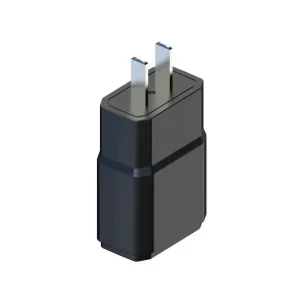
A selection of external adapters and open frame units featuring overvoltage, short circuit, and overcurrent protections for reliable operation.
An engineering guide on thermal management, compliance standards, and mechanical layout for integration.
Because open frame power supplies do not feature built-in cooling fans, their current delivery is dependent on the ambient thermal environment. Selecting the correct unit requires analyzing two primary operating states:
For New York-based industrial automation setups where environments can vary, engineers must design physical enclosures that promote convective flow or integrate system fans to maintain stable power outputs.
Industrial applications must meet strict safety standards to prevent fire hazards and electrical shock. For standard ICT and industrial systems, IEC/EN/UL 62368-1 is the mandatory standard, replacing the older UL 60950 guidelines.
For medical devices—such as patient diagnostic equipment in clinical environments—the power supply must meet IEC/EN 60601-1 (3rd or 4th Edition). This standard mandates strict insulation barriers, specifying 2 x MOPP (Means of Patient Protection) to limit leakage current to safe levels (often <100µA or <300µA under single-fault conditions) to prevent harm to patients.
Open frame designs lack a metal enclosure to block electromagnetic radiation, meaning they generate both radiated and conducted electromagnetic interference (EMI). Integrating these units requires proper routing of input and output wiring. Placing AC and DC paths near each other can compromise the filtering circuit's effectiveness. Adding internal common-mode chokes, differential mode inductors, and Y-capacitors helps the system comply with FCC Class B and EN55032 Class B standards, which is a requirement for deployments in commercial and residential areas throughout New York.
Technical and logistical questions resolved for global procurement and engineering teams.
Open frame power supplies are designed without a metal cover, exposing the PCB assembly. This structure allows for integration into larger systems, optimization of airflow paths, and reduced weight and component footprint. Enclosed units include a dedicated metal case, providing physical protection and simplified EMI shielding, but they are larger and typically more expensive.
All our external adapters and open frame modules comply with US DoE Level VI and European CoC Tier 2 regulations. By incorporating active Power Factor Correction (PFC) and advanced resonant topologies (such as LLC converters), our systems achieve high active efficiency, minimizing heat loss and reducing overall system standby power draw.
Our medical open frame switching power supplies are designed and certified to comply with IEC/EN 60601-1 (3rd/4th editions) and ANSI/AAMI ES60601-1. We implement double isolation barriers to ensure compliance with the 2 x MOPP protection standard, keeping patient leakage currents within allowable limits.
For custom OEM/ODM production runs, standard lead times are 4 to 6 weeks, which includes materials procurement, assembly, testing, and packaging. Shipping to New York via air freight (JFK International Airport) takes approximately 5 to 7 days, while ocean shipping to the Port of New York and New Jersey takes roughly 25 to 30 days.
Contact our engineering and sales support teams to discuss your power requirements, request samples, or coordinate safety compliance documentation for your system designs.