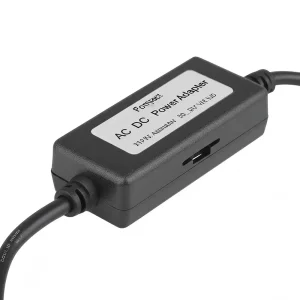
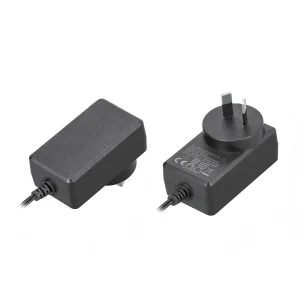
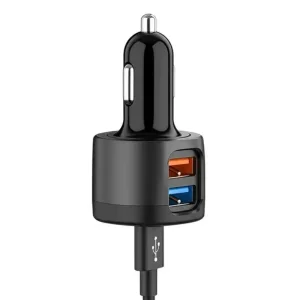
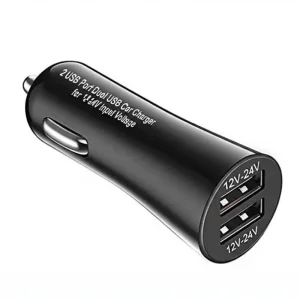
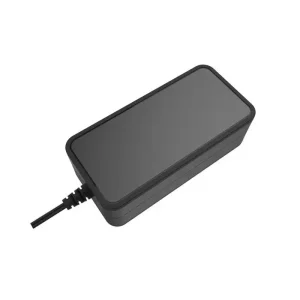
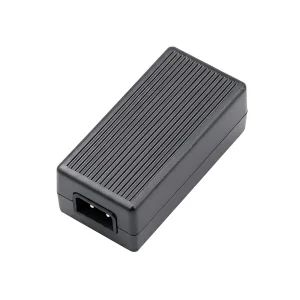
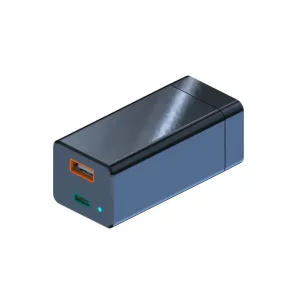
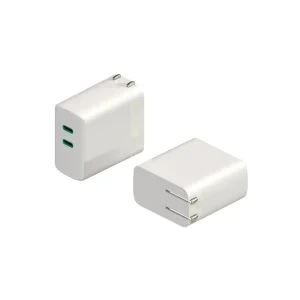
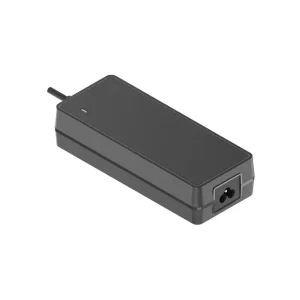
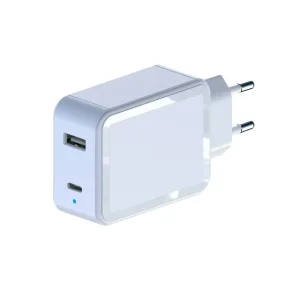
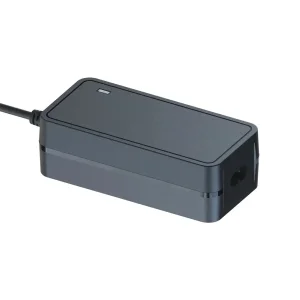
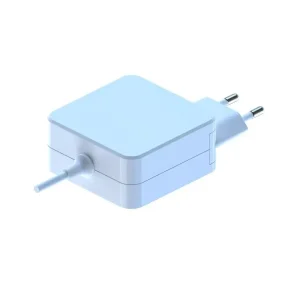
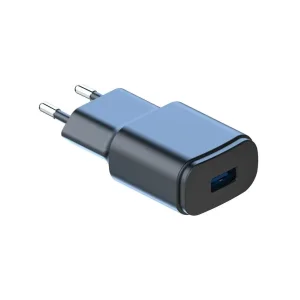
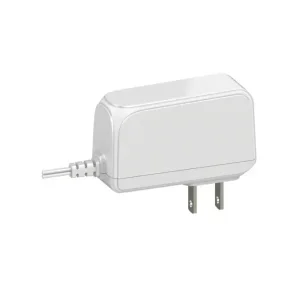
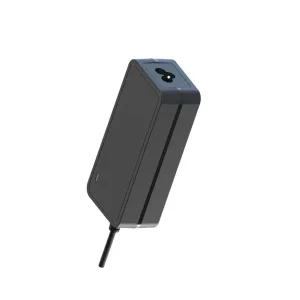
Discover our primary certified power distribution hardware and automotive charging adapters designed for global compliance.
The transition from legacy USB-A ports to Type-C interfaces marks a paradigm shift in automotive and commercial fleet infrastructure.
Modern mobile ecosystems require dynamic voltage adjustments. Programmed Power Supply (PPS) enables chargers to actively adjust voltage and current in real-time, reducing thermal overhead during rapid 20W to 120W charging cycles.
Global enterprise procurement processes place strict emphasis on MTBF (Mean Time Between Failures), thermal management efficiency, and localized safety certifications. B2B buyers look for factories equipped with ISO9001 quality systems and SGS-certified testing setups.
Gallium Nitride (GaN) semiconductor devices replace silicon to deliver higher efficiency, cooler operating profiles, and dramatically reduced sizes. This enables multi-port fast chargers to operate reliably in confined vehicle dashboards.
Shenzhen represents the epicenter of power supply manufacturing. By locating raw material sourcing, tooling, custom component winding, automated surface-mount technology (SMT) lines, and compliance labs in a single geographical cluster, suppliers here can optimize pricing and shorten product time-to-market.
For custom OEM/ODM projects, this allows developers to rapidly build prototypes, adapt PCB layouts to meet localized safety regulations, and verify EMI performance under real load profiles.

Established in August 2010, Shenzhen FuYun (RUIYU) Technology Co., Ltd. is a specialized manufacturer integrating R&D, production, sales of power adapters, chargers, and high-pressure core parts.
Factory Location: No.129 of the first industrial zone, Lisonglang Community, Gongming Town, Guangming New District, Shenzhen, Guangdong, China.
With a dedicated team of over 800 employees and a management group of more than 30 specialists, we run advanced automated assembly lines and reliability testing labs. By continuously strengthening our quality management system and improving service awareness, we have successfully captured a 60% market share in the USA and EU regions. We are also expanding rapidly in China, Japan, South Korea, and Southeast Asia.
In 2012, FuYun passed a series of national and international certifications, building a stellar reputation across the global consumer electronics industry.
We standardize our Standard Operating Procedures (SOPs), testing each product against the strict requirements of international safety standards and quality management systems. This ensures all power adapters, wall chargers, and car adapters achieve a 100% pass rate before packaging and shipping.
RUIYU TECHNOLOGY was established, specializing in AC/DC power adapters, portable fast chargers, and high-efficiency switching power supplies.
Obtained key global safety approvals and compliance certifications, including TUV, GS, BS, CE, UL, FCC, C-UL, PSE, SAA, and CCC.
Our complete product portfolio achieved full compliance with EU environmental requirements, verified by SGS RoHS testing.
Implemented structural operational improvements, certifying our production plant under the ISO9001:2000 Quality Management System.
Monthly production orders scaled to 800,000 units, supplying key accounts in the USA, EU, UK, and Japan, alongside custom ODM production for South Korean clients.
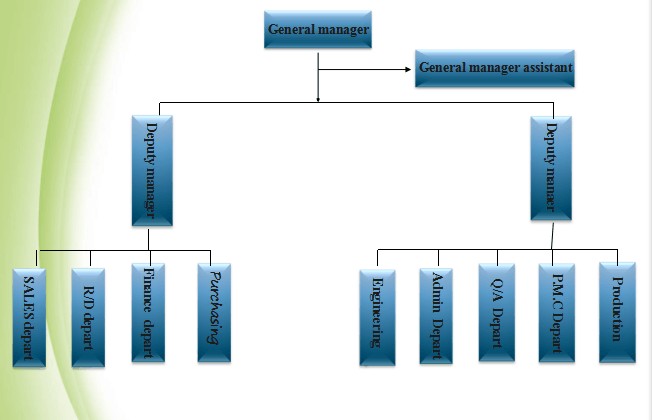
At FuYun (RUIYU) Technology, we operate like a closely knit family, emphasizing teamwork and cross-departmental synergy to satisfy complex OEM procurement contracts.
Designs high-efficiency adapters matching global market trends and secures international certifications.
Sources high-grade raw materials matching client build sheets and schedules component delivery.
Conducts incoming material testing, in-line inspections, and final functional checks.
Manages precision manufacturing steps, SMT mounting, wave soldering, and burn-in testing.
Our international sales team provides round-the-clock support via email, phone, WeChat, Skype, and Facebook to address inquiries, sample confirmations, pricing adjustments, and shipping logistics.
Our metrics represent real-world throughput, verified safety profiles, and production milestones achieved over years of global manufacturing.
Fast charging profiles are not one-size-fits-all. Custom electronics must be optimized for diverse vehicle electrical systems.
Commercial trucks operate on 24V electrical networks, which experience severe load dumps and voltage spikes. Sourcing chargers with wide-input buck-boost converters ensures continuous power for Electronic Logging Devices (ELD) and route navigation hardware.
With passengers switching devices constantly, ports experience heavy physical wear. Industrial chargers require heavy-duty contacts, premium ABS+PC fireproof shells, and intelligent multi-port power allocation to survive heavy usage.
Importers and brands sourcing for corporate distribution focus on cosmetic customizability (anodized aluminum shells, laser-etched branding) combined with certifications like FCC Part 15 and CE EN50498 to protect their liability.
Get answers to critical technical questions regarding wholesale USB-C fast car charger manufacturing and global imports.
Our extended range of switching power adapters, desktop power blocks, and multi-port charging platforms.
 Tech Adapter