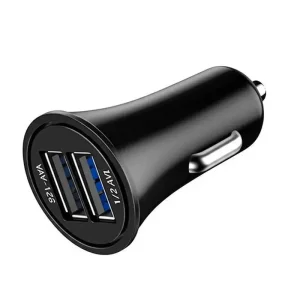
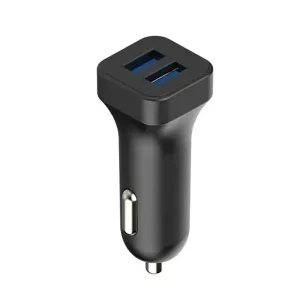
In the modern automotive and consumer electronics landscape, charging capabilities inside vehicles have evolved from a secondary accessory to critical infrastructure. The proliferation of power-hungry devices—including ultra-high capacity smartphones, tablets, and even professional-grade laptops—demands robust, stable, and highly-efficient DC-to-DC conversion architectures within the vehicle cabin.
As enterprise procurement agents and brand owners navigate the global supply chain, sourcing high-quality wholesale dual car charger USB C products directly from verified manufacturers is paramount. This whitepaper analyzes the deep engineering requirements, safety standards, and logistical steps needed to source heavy-duty, high-performance in-car power modules that survive the electrical volatility of automotive power networks (12V–24V DC input variance).
Effective DC-to-DC step-down systems require sophisticated Buck-Boost Converter Topologies. A premium vehicle charger must accept a wide range of input voltages while maintaining a ripple voltage below 100mV under full load conditions. This requires high-grade solid capacitors and synchronous rectification controllers to prevent vehicle electrical noise from damaging sensitive mobile equipment.
Modern dual-port USB-C architectures utilize intelligent IC control layers (such as Cypress or Injoinic ICs) to dynamically adjust wattages. For example, when a single port is active, it can deliver up to 45W or 65W to power a laptop. When both ports are occupied, the internal controller switches to a balanced mode (e.g., 30W + 30W or 45W + 18W), protecting the vehicle's electrical circuit while maximizing safety.
By substituting silicon with Gallium Nitride (GaN) semiconductor technology in higher-power automotive chargers, factories can compress the charger chassis by up to 40% while lowering thermal emissions. GaN transistors exhibit much lower RDS(on) (drain-source on-resistance) and reduced switching losses, maintaining operating temperatures well below 65°C under maximum long-term loads.
Unlike standard wall outlets, a vehicle's alternator produces voltage spikes (load dumps) that can reach up to 80V. Factory designs must include Transient Voltage Suppressors (TVS), Over-Current Protection (OCP), Over-Voltage Protection (OVP), and Short-Circuit Auto-Recovery to guarantee standard compliance and protect device batteries from catastrophic failures.

Shenzhen FuYun (RUIYU) Technology Co., Ltd. is a high-tech enterprise integrating research and development, design, precise production, and global sales of power adapters, automotive USB chargers, and switching power supplies. Operating from our production base at No. 129 of the First Industrial Zone, Lisonglang Community, Gongming Town, Guangming New District, Shenzhen, Guangdong, China, we support worldwide tech brands, distributors, and fleet companies.
With a workforce exceeding 800 employees and over 30 dedicated management and senior design engineering staff, we deploy automated soldering machines, advanced multi-channel parameter testing systems, and robust burn-in chambers to ensure zero-defect outgoing quality.
Through systematic quality control processes and a customer-first philosophy, we have captured a combined 60% market share in the United States and the European Union, while concurrently expanding footprints across Japan, South Korea, and Southeast Asia.
RUIYU Technology was founded, focusing on R&D of high-efficiency AC/DC adapters and switching power designs.
Acquired international safety standard certifications including TUV, GS, BS, CE, UL, FCC, C-UL, SAA, PSE, and CCC.
Products passed SGS laboratory validation, achieving full compliance with EU RoHS directive standards.
Our manufacturing facility successfully achieved ISO9001:2000 Quality Management System accreditation.
Monthly production surpassed 800,000 units, securing large-scale orders across North America, EU, Japan, and South Korea.
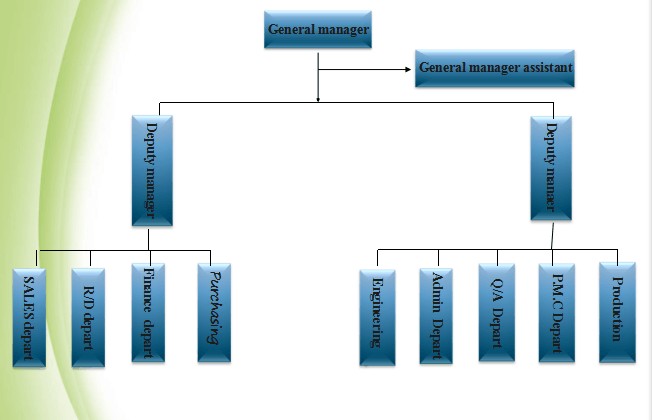
We emphasize horizontal cross-departmental coordination to shorten lead times, maximize component traceability, and streamline high-volume customized OEM projects.
Monitors fast-charging protocols (PD 3.1, PPS, QC 5.0) and designs compliant PCB layouts for complex automotive systems.
Secures certified ICs, PC components, and components to stabilize production costs and ensure component quality.
Applies Strict Incoming Material Inspection (IQC), In-Process (IPQC), and Final Output Testing (FQA) standard procedures.
Manages high-throughput automated insertion, wave soldering, ultrasonic welding, and final unit aging runs.
Coordinates international freight, custom clearances, certification declarations, and 24-hour buyer communications.
We maintain around-the-clock availability for enterprise buyers across continents via Wechat, Skype, Email, and direct international phone lines. By deploying structured standard operating procedures (SOPs), we test 100% of manufactured units to fulfill our core target: High Quality, Better Pricing, and Best Service.
Operating in global retail channels demands absolute regulatory compliance. We provide full support for localized certificates depending on your target markets:
We work in tandem with third-party testing laboratories (like SGS, TUV, and Intertek) to ensure that the certifications issued to our clients map accurately to their domestic import customs databases, eliminating custom clearance friction.
Sourcing from Shenzhen allows us to acquire premium raw materials—from raw PC flame-retardant housings (UL 94 V-0 rated) to high-frequency transformer coils—within a 50km radius. This vertical integration allows us to optimize Bill of Materials (BOM) pricing and easily scale up production.
If you require custom industrial designs to match your corporate branding, our in-house tooling workshops can fabricate custom molds. This results in faster turnarounds and significantly reduced prototyping costs compared to Western factories.
All dual USB-C car chargers are subjected to temperature cycling tests (-20°C to 80°C), insertion durability tests (10,000 cycles for USB-C receptacles), salt spray testing for metal contacts, and multi-hour high-temperature active aging tests.
A dual USB-C car charger is not merely a retail shelf item. Different industries require customized solutions to optimize durability and performance in real-world scenarios:
Delivery fleets, freight trucks, and emergency service vehicles rely on constant, uninterrupted power to supply dashboard mounts, ruggedized tablets, and telematics systems. A failure in the charging unit translates to offline GPS and communication logs. We supply chargers that withstand continuous 24/7 duty cycles and accommodate the vibration spikes typical of heavy-duty transport vehicles.
In-car accessories for ride-share drivers undergo hundreds of insertion cycles per day. We build chargers using reinforced Type-C spring clips and high-durability internal springs, ensuring that both drivers and passengers receive rapid, uninterrupted power throughout their journeys.
For consumer electronics retail brands, styling, packaging, and cosmetic quality are top priorities. Our ODM team assists with anodized aluminum shells, laser-etched branding, and environmentally friendly retail packaging designs that capture consumer attention on store shelves.
Clear, transparent answers regarding manufacturing capabilities, lead times, safety protocols, and customization options.
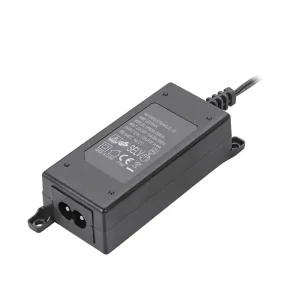
 Tech Adapter